Why Coaching-Heavy Professional Development Is My Focus for Transforming K-8 Education

Updated: Jul 27
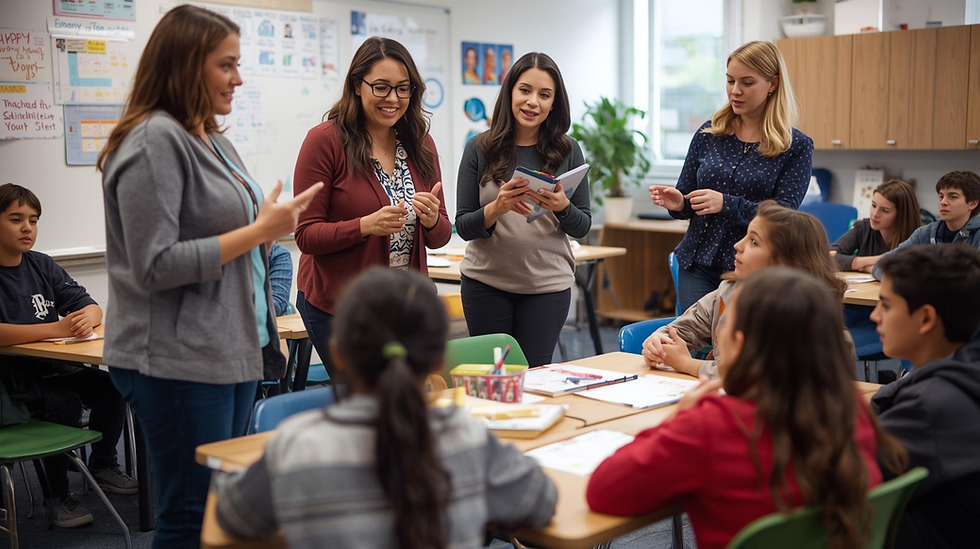
In my 25 years of experience teaching and leading in inclusive classrooms and districts, I’ve seen firsthand how professional development (PD) translates into improved teaching practice—and more importantly, better student outcomes. Over the years, my focus has increasingly centered on coaching-heavy PD as the most effective way to build teacher capacity and drive meaningful change in K-8 education.
Why Coaching-Heavy PD?
Coaching-heavy PD is different from traditional workshop-heavy PD in several critical ways. Whereas workshops typically provide one-time or sporadic training sessions, coaching-heavy PD is a sustained, personalized process embedded in the daily work of teachers. It focuses on real classroom practice, with coaches observing lessons, offering real-time feedback, guiding reflection, and supporting teachers as they iteratively refine their instructional strategies.
This approach recognizes that learning to teach differently is not an event—it’s a journey. Teachers need ongoing, meaningful support to apply new methods confidently and adapt practices to fit their students’ unique needs. Coaching fosters deep collaboration, trust, and a growth mindset, which are essential for sustaining instructional change and ultimately improving student achievement.
Limitations of Workshop-Heavy PD
While workshops play a valuable role in introducing new concepts or instructional frameworks, they often fall short in producing lasting change. Their generalized content may not address the specific challenges teachers face, and without follow-up support, new strategies may not be fully integrated into classroom routines. The passive nature of many workshops also limits active practice and personalized feedback that educators need for real growth.
My Commitment to Coaching-Driven Growth
In my leadership and consulting work, I prioritize coaching-heavy PD because it aligns with what research and experience tell us about effective teacher development. It empowers educators by meeting them where they are, fostering reflective practice, and tailoring support to their instructional contexts. For inclusive and student-centered districts striving for personalized learning, this model ensures that the PD journey is deeply connected to classroom realities and student success.
By investing in coaching, school leaders can build a culture of continuous improvement that brings instructional excellence to all students, especially those with diverse learning needs. I am passionate about guiding districts through this transformation—helping educators grow through sustained, collaborative coaching to unlock the full potential of personalized learning.


Comments