Bridging the Gap Between Reading Research and Real Learning: Literacy Consulting in Summerville SC

Literacy Consulting in Summerville SC
Evidence-informed literacy consulting, personalized instruction, and family advocacy in Summerville and the greater Charleston area.
Every learner deserves an opportunity to become a confident, capable, and independent reader. But getting there requires more than choosing a reading program, providing extra practice, or hoping that more time will close a learning gap.
It requires understanding where a learner is, what skills are developing, what barriers may be interfering, and what instruction needs to happen next.
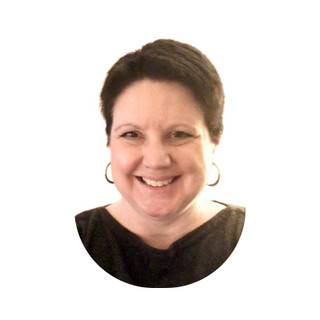
I'm Jennifer Cimini, M.S.Ed., founder of Learning to Learn, LLC, and a Literacy, Learning & Family Engagement Specialist.
After more than two decades in education, including 18 years in the inclusion classroom, I've learned that meaningful progress begins when we stop asking children to fit themselves to the lesson and start making instructional decisions based on the learner in front of us.
That's the foundation of Learning to Learn.
The Gap Between What We Know and What We Do
We know more about how children learn to read than ever before.
Decades of research across cognitive science, linguistics, psychology, and education have helped us understand the processes involved in skilled reading.
Yet families continue to ask:
Why is my child struggling to read when they're working so hard?
Why are we practicing the same skills without seeing meaningful progress?
What do these assessment scores actually tell us?
Is my child receiving instruction that matches their needs?
How can I support reading at home without becoming the teacher?
Educators have important questions, too.
How do we translate assessment results into instructional decisions?
How do we support learners at different points in the reading continuum while maintaining high expectations? How do we make evidence-informed instruction manageable within real classroom conditions?
The challenge isn't simply knowing that reading research exists. It's knowing how to use that knowledge to make better instructional decisions.
That's where I want Learning to Learn, LLC to make a difference.
Right Reader. Right Lesson. Real Growth.
My approach begins with one essential question:
What does this learner know, and what does this learner need to learn next?
Reading development is complex, but instructional decisions don't have to be mysterious.
The Science of Reading helps us understand the interconnected skills involved in literacy, including phonemic awareness, phonics, word recognition, fluency, vocabulary, language comprehension, and meaning-making.
When a learner struggles, we need to identify which component requires attention rather than assume that more reading practice alone will solve the problem.
For example, a child may understand a story beautifully when someone reads it aloud but struggle to decode the same text independently.
That distinction matters.
The learner may have strong language comprehension but need explicit instruction in the alphabetic code. Giving that child more comprehension worksheets won't necessarily address the underlying decoding difficulty.
Likewise, a learner who reads words accurately but struggles to explain the text may need support with vocabulary, background knowledge, sentence structure, or comprehension processes.
Different needs require different instructional responses.
My instructional decision-making follows a practical cycle:
Know the reader. Identify the need. Match the lesson. Provide access. Measure growth. Adjust the pathway.
This is how we move beyond simply delivering instruction toward making instruction responsive.
Supporting Families as Partners in Literacy
Parents shouldn't need a degree in education to understand how their child is learning to read.
Yet many families leave conferences, intervention meetings, or evaluation discussions with more questions than answers.
They hear terms like phonemic awareness, decoding, fluency, reading comprehension, and progress monitoring without always understanding how those skills connect.
I believe families deserve clear explanations, meaningful participation, and practical tools.
At Learning to Learn, I help families understand what assessment information reveals, what questions to ask, and how to recognize whether instruction is addressing their child's actual learning needs.
That may include interpreting educational evaluations, preparing for school meetings, understanding accommodations, or identifying appropriate next steps.
My goal isn't to create conflict between families and schools.
It's to build understanding, strengthen collaboration, and keep the learner at the center of the conversation.
Supporting Educators Through Practical Application
Teachers are often expected to meet increasingly complex learning needs while managing limited time, competing priorities, and extensive instructional demands.
Telling teachers to use evidence-based practices isn't enough.
They need opportunities to understand what those practices look like, how to implement them, and how to adjust instruction when students aren't responding as expected.
Through professional learning and consultation, I focus on connecting literacy research with practical instructional decisions.
This includes using assessment data to identify skill needs, organizing flexible instructional groups, strengthening explicit instruction, and monitoring student progress.
A central principle guides this work:
A shared instructional sequence can provide consistency while flexible, data-informed instruction provides the personalization learners need.
Supporting teachers and empowering families aren't competing priorities. They're connected responsibilities.
What Can Families Do at Home?
Supporting literacy development doesn't have to mean recreating the school day at the kitchen table.
Start with a few purposeful questions.
1. Know what your child is practicing.
Is the goal to recognize letter-sound relationships, decode words, build fluency, learn vocabulary, or understand a text? The purpose determines the practice.
2. Match practice to the skill.
If your child is learning to decode, use words and decodable texts aligned with the phonics patterns they've been taught. If the goal is language comprehension, read aloud and discuss rich, engaging texts.
3. Make thinking visible.
Instead of immediately correcting every mistake, guide your child to notice, check, and repair it. Model how to think through a word or revisit a sentence when meaning breaks down.
4. Practice consistently and purposefully.
Short, focused practice with accurate feedback can be more useful than lengthy activities that repeatedly reinforce the same errors.
5. Look for evidence of growth.
Can your child apply a skill more accurately? More independently? In new words or unfamiliar texts? Progress is about more than completing an activity.
The goal isn't to make parents responsible for delivering specialized instruction. It's to help families understand how to reinforce learning while preserving confidence and connection.
Learning Doesn't Have to Wait
I created the Learning to Learn Field Guide Series because families need accessible information and practical guidance, especially when additional instructional support isn't immediately available.
The series helps families explore foundational phonics, meaningful word parts, active reading, and the relationship between word recognition and language comprehension.
These resources are designed to make literacy concepts understandable and help families ask better questions, support appropriate practice, and participate more confidently in their child's learning journey.
They're not a replacement for individualized assessment or instruction. They're a starting point for greater understanding.
Bridging the Gap, Together
Learning to Learn, LLC serves families, educators, and schools throughout Summerville, Berkeley County, Dorchester County, and the greater Charleston, South Carolina area, with virtual support available beyond our local community.
My work includes individualized literacy instruction, family consultation, educational advocacy, evaluation interpretation, and professional learning for educators.
But the purpose behind every service is the same.
To help adults make informed instructional decisions so learners have greater access, stronger skills, and a clearer pathway toward independence.
I don't believe children should have to wait until learning gaps become overwhelming before we ask whether the instruction matches their needs.
And I don't believe families and teachers should have to navigate those questions alone.
Every learner deserves an evidence-informed, equitable, and personalized pathway across the literacy continuum.
Right Reader. Right Lesson. Real Growth.
Learning to Learn, LLC | Literacy • Learning • Family Engagement
Ready to better understand your learner's literacy needs?
Explore our literacy resources and consulting services, discover the Field Guide Series, or connect with Learning to Learn to discuss your next steps.


Comments